Friday, January 21, 2011

Rubber Molding Methods Offer Essential Functionality


Plastics and Rubber Products have become a common feature in homes. For that matter even Industries have fallen hook, line and sinker for the two. Two major factors like credibility and versatility have been driving their demand. Considering the soaring demand for plastic and rubber products, we have come up with a common platform for all plastic and rubber manufacturers, suppliers, exporters and buyers, to trade with each other at the click of a mouse. A few years back, transactions used to take place ‘on –field’, with both parties sitting face-to-face, before closing the deal. Here, the major plus point is the transaction is taking place ‘on-line’ and you can strike a profitable deal right away. Sitting face-to-face can be done anytime.

The use of rubber has revolutionized much of the world. In fact, without rubber, many of the daily conveniences that most people take for granted would not even be possible, or if possible, they would not operate in the same way. Rubber cushions, isolates, eliminates unwanted vibration, noise, and even offers better traction for moving parts. Rubber is used for an incredibly diverse number of applications. However, there is one key to all of these diverse uses - rubber molding techniques.

Rubber molding is a science unto itself, with a number of different techniques and technologies involved. Through the process of specialized molding techniques, any type of rubber design can be created, from air inlet elbows to locomotive boots, voting machine parts, silicone rings for heart and lung machines, viton seals and much, much more. What sorts of molding techniques are used in the industry, and what does each technique have to offer? Here is a glimpse of the technology behind the functionality that most of us take for granted.

Compression Rubber Molding: This method uses a compression mold to create rubber parts and forms. In essence, this process simply requires that a mold be opened, an uncured slug of rubber be inserted and then sufficient compression be placed on the now-closed mold to shape the rubber into the desired shape. Molds can have a single cavity and two plates, or they can be configured in numerous different ways to create the desired form.

Transfer Rubber Molding: Transfer molding is quite a bit like compression molding, in that it uses a mold to create the final form. However, material is transferred from the "pot" by the force of a plunger and enters channels, or "sprue," and runners to fill the cavities within the mold. This is used to create a wide range of different parts, particularly those where a need for delicate rubber pieces or high-definition pieces is required.

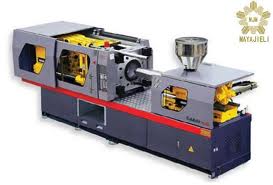
Injection Rubber Molding: Injection molding is used with numerous different materials, including rubber and plastics. It results in pliable parts that are also durable, and is capable of high-speed mass production. Rubber is injected into a mold and the amount is metered to ensure the correct amount is used. This material is injected into a mold, which is secured with a clamp. An incredible diversity of products can be manufactured through the process of injection molding.

The key to having the high-quality rubber components that you need is to choose a company with the utmost experience and expertise in rubber molding techniques. The best option is to choose a firm that offers all three of the abovementioned techniques, as this will ensure that you can have any type of rubber component manufactured that you might require, from delicate rubber items to highly detailed, complex rubber boots. Of course, you should also make sure that the company has experience making similar products, as this will certainly play a role in your satisfaction with your finished rubber pieces.

Friday, January 7, 2011

The Different Types of Materials Used to Make Castors


Of course it's not hard to figure out that the very first castors made were most likely made out of cast iron, but would you believe that you can still buy brand new cast iron castors today? In fact the list of materials used to make castors now is quite extensive due to the incredible number of applications for them in homes and businesses.

Today there are several types of rubber that now go into making a wider assortment of castors to accommodate any number of industrial, and materials handling applications. This list is almost endless, but one special application that comes to mind is floor friendly, scuff free rubber castors that leave no marks on a floor in places like clinics and hospitals.

Then there is the huge variety of rubber, and plastic castors that are made from materials that have been specially formulated to resist oil, acid, and alkaline substances. You see not all plastics and rubber can tolerate being exposed to oil, and particularly petroleum based oil. It tends to in fact dissolve many common plastics and rubber over time. These are a great choice for castors in mechanics workshops and other engineering environments.

Still one more amazing development concerning materials that go into the production of today's modern castors involves mechanics. You see there are now castors that you can buy that actually have a built in lift component for raising or lowering whatever they are attached to. These lifting components are also available in electric or manual mode.

There is also a wide range of pneumatic castors available in an equally wide range of sizes. Pneumatic means that they are filled with air, just like a standard tyre and these are a great choice for transport mechanisms that need shock resistance. This means that they help to cushion the ride on platforms and containers that are to be used for transporting delicate objects via castors or even people.

Some of the most amazing developments involve heat resistant materials that go into the manufacture of castors that can in fact be rolled into, and left in incredibly hot environments. Commercial bakers for instance now use these castors on carts that can transport bakery products in and out of commercial ovens. This is a huge labor saver.

While of course the actual material that the castor wheels are made from must be heat resistant, what many people don't consider is that the lubricants that protect the bearings also must be able to resist the high temperatures as well. Without new developments in high temperature lubricants, these types of wheeled transport castor systems wouldn't be possible.

Along with all the latest developments in the different types of materials to used to make castors have come some very noteworthy developments in carts and platforms that can be purchased right along with them. For example the compact, manually operated elevating transport systems that can take the place of a forklift for a fraction of the cost.

Monday, January 3, 2011

Acrylic Plastic Products


Acrylic plastic sheets are considered as the nearest comparison to glass with more assets to go with. It has more uses and capacious clear plastic with 93% clearness with many more qualities that makes it more ideal to use.

Acrylic sheets were made out of acrylic acid. It was divided into four classes namely: Plexiglas, Lucite, Perspex, and Crystalite, all of which are of same variety as that of polymethyl methacrylate (PMMA).

The superior quality acrylic plastics are sturdy, unbreakable and it can resist to ultraviolet radiations and deterioration. More so, it is highly transparent. Compared to thicker glass, it has a greener tint while acrylic sheet maintain its transparency even on high density level.

Acrylic plastic has been widely in demand in different usage in many industries in different forms like auto parts, bathroom tools, skylights, windows, signal lights, sign posts, aquariums and many other useful things. It is so light from far from breaking unlike glasses. Another feature is that can easily be recycled and molded into another shape. The disadvantage of acrylic sheet is that it easily gets scratched but it can easily be restored to its original form by polishing it again.

Acrylic plastic sheets is easy to find so it's not really a problem because it's widely used in the market and can be found anywhere and even in online stores. Pre-defined dimensions vary from 24" x 48" to 72" x 186" and a width from 1/16 "to 4". Different sizes and shapes are available in many showrooms with available service person to do the cutting.

The size and shape that you would want can be easily obtained either in cast, transparent, shaded, tinted, mirror or laser cut. Aside from its sheet form, you can also find various designs made out of acrylic plastic. This plastic maintain its shape and shades for a longer period compared to the ordinary plastic that will tend to turn brown or yellowish in color that will crack in shorter period.

Acrylic plastics don't need high maintenance too. All you have to do is look for a soft rug and spray it with mild soap or detergent and rub it dry. You can use it around your house in many ways.

Plastics and Rubber Products have become a common feature in homes. For that matter even Industries have fallen hook, line and sinker for the two. Two major factors like credibility and versatility have been driving their demand. Considering the soaring demand for plastic and rubber products, we have come up with a common platform for all plastic and rubber manufacturers, suppliers, exporters and buyers, to trade with each other at the click of a mouse.

Saturday, January 1, 2011

Why You Should Support Recycled Products


With a lot of discoveries and innovations nowadays, much end-products and other garbage are thrown into the environment. Some people are not aware of the long-term consequences of dumping garbage in the environment. Maybe they are not aware that one's actions always have a consequence. Whether we are aware of it or not, the effect will normally and rationally come into being. And the course of action may be, sometimes, difficult to pursue once the effect has spiraled into an uncontrollable level.

We cannot allow this to happen in the environment where we build our lives, family and future. This planet deserves the best protection we can give it since, of all living things, we are the ones gifted with intelligence and the heart to understand what is beneficial for the individual and the whole. Let us prove to ourselves that we can protect our home, the earth, so our generation for eternity will have the chance to enjoy our legacy. For a start, we could be at the other end of the line of environmental supporters. Be a supporter of recycled products. Recycled products may not have the designer names you desire yet you can do better than that. It's not a single shopping delight just for you, but when you support recycled products you do it for the total of humanity. The following are some reasons why you should give your support to recycled products:

1. Using recycled products like bags, decors, kitchen accessories, and others minimizes the garbage in your place. This will benefit you firsthand.

2. Aside from helping the environment, you're uplifting your morale by being a trendsetter by using these recycled products. How's that for fashion popularity?

3. It is good for your pocket. You save a lot since these products come in cheap prices yet has a distinct quality.

4. Remember, most of our materials are made of plastic. There is a slight probability they will deteriorate ahead of us in this planet. Hence, we can't let plastics rule our lands. Recycle them into now user-friendly products.

5. Many animals, fish, birds and fowls die because of swallowing plastics and other thrown materials where they mistake it for food. Love them and make the earth a safe habitat for them too, by recycling this garbage into useful products.

Who wants clogged sewers, dirty seas and rivers, and foul air? Then, recycle your unwanted materials into the most wanted fashionable product and household item. Try yourself to support the recycled products and see the statement you will make on others. One good example of a recycled product is the rubber mulch. It is very useful, of good quality and buying these types of products is also helping the environment.

Tuesday, December 21, 2010

Plastic Manufacturing: How Companies Create Household Products


Recently, I've begun to research the plastic manufacturing industry. Upon first starting out, I honestly thought it was going to be pretty simple, but I was in for a surprise! There's actually a lot that goes into shaping some of the simplest things, like a coke bottle. Really, the process has been made much easier by experts trying to improve the field. Without the work of several individuals, the mass amounts of plastic production that incur today would never have made it. From discovering different varieties of plastics to reshaping the machinery needed for it, plastic manufacturing has truly come along a way. However, for us to get an accurate understanding of the manufacturing process, we first have to understand plastic itself.

Plastic is basically a large molecule composed of repeating structural units, also referred to as a polymer. Many manufacturers of plastic add a mixture of other compounds in order to reduce the cost and make the product better. This is often very productive. Depending on the manufacturer you go to, composition of plastic may vary, but never too drastically.

Plastic comes from the Greek word plastikos. Plastikos translates to "able to be shaped or molded." This applies to plastic because during its manufacturing, it is easily manipulated in order to fit the shape of various plastic products. When you begin to look at what kind of products are created and used by these manufacturers, you really begin to see its versatility. For instance, the thousands of different types of bottles, tubes, boxes, and plates that are produced by plastic companies every day.

There are really only two types of usable plastic. These include thermoplastics and thermosetting polymers. The main difference between these two types of plastics is that thermoplastic has gone through a chemical change to become what it is. Thermosetting polymers, however, have not been chemically changed, which means that once they've heated and solidified, they can not be reheated as is the case with thermoplastic.

There are many different categories in which you can place plastics, depending on what quality a manufacturer is most interested. For example, it's very likely that plastics are categorized by quality or physical property. These deal with aspects of plastic such as strength, temperature of transition, and density. There is also a good chance that plastics will be grouped by chemical structure: polyesters, halogenated plastics, acrylics, or polyurethanes.

You may not know this, but there are quite a few different types of plastics, some may seem familiar to you. After WWI, the pressure was on to create cheap and durable materials in order to mass produce. Thus, two new plastics were created, PVC (or polyvinyl chloride) and polystyrene. These plastics were manufactured by IG Farben from Germany, and they rose quickly in popularity. These plastics, especially PVC, continues to be a huge member of the plastic community (for things such as housing, plumbing, etc.).

These plastics only scratched the surface, for there was much work to improve over the next several years, and many continued the plastics race. A new contender entering the field was polyamide, or more commonly known as nylon. What shocked everyone so much about nylon was it's ability to stretch without being damaged. Soon after the second World War, demands for nylon climbed to a record high, with women's nylon stockings as one of the best selling products!

Plastics and Rubber Products have become a common feature in homes. For that matter even Industries have fallen hook, line and sinker for the two. Two major factors like credibility and versatility have been driving their demand. Considering the soaring demand for plastic and rubber products, we have come up with a common platform for all plastic and rubber manufacturers, suppliers, exporters and buyers, to trade with each other at the click of a mouse. A few years back, transactions used to take place ‘on –field’, with both parties sitting face-to-face, before closing the deal. Here, the major plus point is the transaction is taking place ‘on-line’ and you can strike a profitable deal right away. Sitting face-to-face can be done anytime.

Monday, December 20, 2010

Injection Molding: Helping Increase The Production Of Plastic


Many don't exactly find injection molding interesting, let alone even know about. However, I've made it my personal goal to, at the very least, get people to begin started on the road towards finding out how things are made! One can easily forget that what they just bought at the store was in fact made by the inventions of people over several years as well as by the hands of specialists and people with a variety of expertise. In fact, this is so often overlooked that it can be pretty fascinating to learn all the ins and outs of plastic extrusion. Man and machine working together in order to make it easier on the population. It's really a beautiful thing to watch and while researching and working alongside specialists in the industry, I've grown to actually respect them for their hard work and dedication. They're responsible for so many plastic products and byproducts that have been in use for years, and will be in use for years to come.

It's extremely important that you understand the molding process. But to start you off, I think it's smarter to just describe it as simply as possible. What polymer molding actually does is to heat and shape thermoplastic and thermosetting plastic in order to manipulate it into a finished product. This is done with the help of a number of people (engineers, moldmakers, and a number of other specialists).

To really appreciate everything that goes into injection molding, it's a good idea to track its beginnings. Throughout the 18th and 19th centuries, contributions to the plastic manufacturing industry have been enormous. It all started with the beginning of synthetic plastic. A man by the name of Alexander Parkes, an inventive thinker from Britain discovered a material which he named Parkesine.

Parkesine, as might be expected for what is essentially the first of its kind, had several faults. First of all, and really most importantly, Parkesine was highly flammable. This led to an incredible amount of risk for all those working on it. Moreover, the finished products were expensive, but flimsy, and were widely known to crack and break. Thankfully, In 1868, American John Wesley Hyatt improved Parkesine.

Hyatt titled his invention celluloid, and this plastic material could be molded cheaper, easier, and more durably. This invention really paved the way for the industry to start manipulating injection molded products. Four years after the making of celluloid, John and his brother Isaiah Hyatt worked together to create the prototype of the very first plastic extrusion machine. This machine was actually quite simple (in comparison with the other extrusion machines used today).

Following the introduction of Hyatt's polymer extrusion machine, the industry rapidly grew. Now that the process of plastic profile extrusion was really being set into play, new ideas and innovators were stepping up to the plate, ready to improve. Different versions of Hyatts' machines were made in order to produce different products, including collar clips, hair combs, and even buttons.

During the 1940's, a spike in the demand of plastic products. Companies were forced to turn out huge numbers of products, but too many simply couldn't keep up with the orders! So, in 1945, James Watson Hendry took it upon himself to create a bigger and better plastic manufacturing machine. This particular machine was the first of its kind to employ the use of a screw, and specialists found that they were able to better control the speed of the injection, which in turn greatly increased the quality of the final products.

It was also found out that since the screw was now mixing the molten plastic products, other things could be mixed in with it. By adding different dyes, all sorts of new colorful products could be made, expanding the industry exponentially. Even now, most injection molding machines use a type of screw injection molding. Hendry also worked for thirty more years and release an injection molding machine that applied the use of gas, hugely reducing the use of important resources.

Plastics and Rubber Products have become a common feature in homes. For that matter even Industries have fallen hook, line and sinker for the two. Two major factors like credibility and versatility have been driving their demand. Considering the soaring demand for plastic and rubber products, we have come up with a common platform for all plastic and rubber manufacturers, suppliers, exporters and buyers, to trade with each other at the click of a mouse. A few years back, transactions used to take place ‘on –field’, with both parties sitting face-to-face, before closing the deal. Here, the major plus point is the transaction is taking place ‘on-line’ and you can strike a profitable deal right away. Sitting face-to-face can be done anytime.

Tuesday, December 7, 2010

Plastic Contract Manufacturing


Plastic contract manufacturing is the process of manufacturing plastic products on a contract basis. There are many contract manufacturers of plastic products, rubber products and other specialty chemical products. They produce fabricated and extruded plastic products. The plastic fabrication facility of most of the plastic contract manufacturers include the latest Computerized Numerical Control (CNC) routers, mills and lathes for top quality machining of plastic parts and products. Plastic contract manufacturers handle plastic fabrication, CNC machining and CNC turning projects. They usually make plastic products from both natural and synthetic materials. Contract manufacturing of plastic provides plastic products of high abrasion resistance, high tensile strength, high tear strength and good oil resistance.

Plastic contract manufacturers usually make plastic products, components and assemblies at the lowest possible prices. They work together with their customers to determine the materials needed, time taken, design specifications, production developments and certifications required. Contract manufacturers of plastics come up with plastic products in any size, design or quantity, according to the needs of the customer. Most contract manufacturers have a full range of services for design engineering and manufacturing of plastic products.

Plastic contract manufacturing mainly focuses on the quality, repeatability and performance of plastic products. Some contract manufacturers specialize in producing the plastic components for high precision electronic and electrical products, consumer products, automobile products and parts. Many of them also manufacture the press components and precision components of other engineering plastics. Plastic contract manufacturers usually manufacture containers, jars, jigs and fixtures. Generally, contract manufactures use advanced technologies in injection blow molding and compression molding to produce high precision components for electronics and electrical plastics. The materials used in plastic contract manufacturing include low density polyethylene (LDPE), linear low density polyethylene (LLDPE), polypropylene (PP), polyethylene terephthalate (PET), polyvinyl chloride (PVC) and high density polyethylene (HDPE).

Injection molding is widely used for thermoplastics. This process avoids the hardening of plastic in the machine. Injection molding helps to produce more accurate moldings having better control on the material usage. Many contract manufacturers of plastic specialize in the manufacturing dies for injection molded products such as plastic compounds, fan regulators, fan regulator switches, electrical rotary switches, fuse boxes and other special purpose machine parts.

Friday, November 26, 2010

Learning About Plastic Profile Extrusion Is Great!


Ever wonder where the dependable and long lasting plastic products come from? Or more specifically where they are manufactured? Most every plastic used in our daily lives is a product of Plastic Profile Extrusion. It's an interesting process that simply starts with the melting of small raw plastic beads. The plastic needs to be in bead form for easier melting and profile forming. Plastic Extrusion companies manufacturer recognizable products such as piping, window frames, and even adhesive tape! Wire insulation and Plastic sheeting are also big examples of manufactured products. Well for all the knowledge craving minds let's begin with the first step in Plastic extrusion!

As we begin the plastic beads are fed into a heated cavity or cylinder. In most cases the plastic is mixed with colorants or UV inhibitors. As all the plastic and anything mixed in is inside the cavity it's forced through a screw mechanism.

The screw mechanism forces the plastic and any remaining material out the extruder cavity. While the plastic is inside the heater it is a toasty 400 degrees. This is a cool fact! Most extrusion companies have three different heaters inside the cavity.

This is due to overheating being a quite troubling problem for plastic extrusion experts. SO if the plastic is gradually brought to its melting point by three heaters it's not one source of heat at one time. This allows for no overheating. Burnt plastic isn't necessary and does not smell good!

Through the cavity the friction and pressure can sometimes be so great there is no need for the heaters. Plastic Manufacturing Companies shut off the heaters and allow the friction and pressure to keep the plastic at the desired temperature. That's pretty interesting friction and pressure can keep plastic at that high of a temperature.

After the heating is complete cooling fans are then used to keep the cavity at the correct temperature. As the molten plastic reaches the front of the barrel and is complete in the cavity, it's time for the plastic to go through a specially designed screen.

This screen allows for the plastic to become separated from any remaining contaminants whether it is types of food or clay. Following the screen it's time for the die, which gives the plastic its specific profile. After the die is added it must be cooled most cases in a sealed water bath.

Plastics and Rubber Products have become a common feature in homes. For that matter even Industries have fallen hook, line and sinker for the two. Two major factors like credibility and versatility have been driving their demand. Considering the soaring demand for plastic and rubber products, we have come up with a common platform for all plastic and rubber manufacturers, suppliers, exporters and buyers, to trade with each other at the click of a mouse. A few years back, transactions used to take place ‘on –field’, with both parties sitting face-to-face, before closing the deal. Here, the major plus point is the transaction is taking place ‘on-line’ and you can strike a profitable deal right away. Sitting face-to-face can be done anytime.

Wednesday, November 17, 2010

The Real Facts of Plastic Injection Molding


Plastic injection molding is often thought to be a hard process which is a wrong notion of the people. A variety of parts are manufactured using Injection molding process which varies from the smallest component to an entire body component of a car.

The machinery involved in plastic injection molding is costlier and very sensitive and complex equipment. These machines are called as injection molding machines. The machines used are also heavy and some even weigh up to tons of kilograms. But only when these kind of machines are used the final product turns out to be a quality product. This is so because the plastics are fed into these machines and they are heated until they become fluid. This shows that the machines should withstand high temperature and hence the need for a complex equipment.

Plastic materials used for the injection moulding process are thermoplastics or thermosetting plastics. Both the thermoplastic and thermosetting plastics are polymers. Some widely used thermoplastics are nylon, polyethylene, and polystyrene while bakelite, vulcanized rubber are the widely used thermosetting plastic. Sometimes a polymer with a very high elasticity is also used. Such a polymer is called elastomer.

The plastic takes the shape of the cavity or the mold used and get solidified or settled in it. After being solidified it is ejected out After some time molded material is ejected out from the cavity. The same cavity can be used to make any number of molds. The mold is of any desired shape.

The injection molding machine has two components namely the injection unit, the mold and the clamping unit. One should not forget that the process involved in plastic injection molding is not as tough as the size of the machinery. It is a very simple and a systematic process. Initially the injection molding process starts with the injection of the plastic resins or polymers into the injection barrel. The resins are heated to melting point and now the fluid is poured into the mold which is of the desired shape needed. The mold has two components namely the injection mold and the ejector mold. The melted plastic resin in poured into the mold using a sprue the injection mold. And the ejector mold helps in ejecting the plastic part after it is solidified in the mold without any damage using ejecting pins.

The next step is the application of hudraulic or mechanical pressure. This is done in order to allow the trapped air in the mold to escape. This is called the dwelling process. After the pressure is applied the air cavities move to one corner of the mold. Then the fluid is allowed to solidify and the mold is cooled. Finally the solidified plastic part is ejected from the mold either manually or automatically.

After the cooling process there is often change in the mechanical that is both physical and chemical properties of the plastic part. The thickness of the mold is one of the important design considerations of the injection molding process. Usually a mold with an uniform wall thickness is preferred. Thus it reduces the change in mechanical properties of the plastic part.

Friday, November 12, 2010

Discovery of Plastics Towards World Development


Today, plastic is considered one of the greatest inventions in our new generation. It signifies modernity and progress of humanity. Plastic has touched lives of people compared to other breakthroughs in technology. It has replaced old and usual things. Elegant heavy tables and desks have been transformed into lighter structures, with pastel color touches and made homes and offices change their theme. Indeed, plastic fits into the contemporary world. Aside from being light and strong it can be easily molded and it is durable. But have you ever asked yourself how plastics were invented? Everyday, plastics are scattered everywhere, which contributes to health, safety, and security, but have you ever tried searching the origins of plastic?

In 1862, Alexander Parkes made the first ever man made plastic for London's Great International Exhibition. This material, which was made from organic materials that came from cellulose, was first known as Parkisine. Once this material was exposed to heat it could be molded but when cooled, it would retain its shape. Alexander Parkes said that his discovery could do all that rubber can do but at a lower cost. He discovered a material that could be transparent and could also be carved into different shapes. However, it soon lost its limelight as investors had pulled out of the market because of the high value of raw materials used in producing it.

After the discovery of plastic many items were found to be more useful and efficient when made from it. Late 19th century there was a rush on finding a replacement for the ivory used in billiard balls - this was the time that Billiards was extremely popular and the elephant population was being decimated to obtain their ivory. Fortunately, an American inventor named John Wesley Hyatt found the solution using celluloid in 1869. He accidentally spilled a bottle of collodion in his workplace and he discovered that it formed a tough and flexible film. That was when he had the idea of making billiard balls using this new material named collodion, which substituted ivory. But since this material is brittle in nature, billiard balls made from collodion shattered once they hit one another. There was a solution to this problem, which came by adding camphor from laurel tree. Due to this addition, the celluloid was the first thermoplastic or substance that molds when under pressure or heat into shapes that can be retained even after being under heat or pressure.

In 1907, a man-made synthetic was first discovered by Leo Baekeland, a chemist from New York who developed Bakelite or a liquid resin. The Bakelizer, an apparatus made by Baekeland, enabled him to control volatile chemicals when heated and pressurized. This pot-like equipment used by Baekeland developed Bakelite, which hardens rapidly and takes the shape of a container. If hardened, the resin will form a replica of any container where it is placed. Bakelite can be added into any material such as softwood, to make it more effective and more durable. The United States government used Bakelite in its weaponry and war machinery where steel could not be used. It was also used for domestic use such as insulation. Through these uses Bakelite proved itself as a very effective building material. Moreover, Bakelite is resistant to electricity, chemically stable, shatter proof, resistant to heat and it does not discolor, fade or crack when exposed to sea salt or sunlight.

Plastic was later made into different varieties of usable materials like Cellophane, which was discovered by a Swiss engineer named Dr. Jacques Edwin Brandenberger. He came up with an idea for a protective and clear packaging layer during 1900. While sitting at a restaurant, he saw a customer who happened to spill a bottle of wine on the table cloth. A server removed the table cloth and replaced it with another disposing of the soiled one. The Swiss textile engineer swore to dedicate himself to discovering how to apply clear flexible films on the cloth that would keep it safe from such accidents and would make it easier to be cleaned with just a swipe of a towel. He then worked on resolving this issue by utilizing different kinds of materials in experiments up until 1913 when he hit pay dirt with Viscose - known today as Rayon. Brandenberger applied the Viscose to cloth, however the material became hardened and was to brittle for use. Despite his unsuccessful venture in applying his material to cloth he discovered another use for the Viscose. He developed new equipment that would create thin Viscose sheets which later became known as Cellophane. Minor improvements were made to Cellophane in years that followed that allowed it to be used as a clear layer for packaging of any product. Cellophane was the first completely flexible and water resistant wrap.

With the discovery of new plastics came the plastic craze in 1920 as the use of cellophane spread throughout the world. One of the largest companies known as Dupont became a pioneer in discovering other materials made of plastic. A young chemist from Harvard, Wallace Hume Carothers was then the head of Dupont lab. Carothers became responsible for the moisture proofing of Cellophane and during this process discovered a method for creating a new material - Fiber 66 - known commonly today as Nylon. The young chemist saw the promising value of the new discovered tough plastic. Since its discovery the material has been used in widespread fashion including use as a replacement for animal hairs in toothbrushes as well as silk stockings. Carothers demonstrated that by substitution and insertion of elements on the chemical chain, new, durable materials could be discovered and developed. By 1940, the world savored the use of materials like Nylon, Neoprene, Acrylic and other polymers which had taken the place of natural materials.

Another important innovation with plastics was the development of polyvinyl chloride or PVC or vinyl. While working for the B.F. Goodrich company an organic chemist by the name of Waldo Semon attempted to combine rubber and metal. Although its importance was not immediately recognized he later discovered the value of this material as it was inexpensive yet fire resistant, durable and could be molded easily. This material caught the attention of western families for it could last many years in an average living room.

Organic chemists at Imperial Chemical Industries Research Laboratory tested various chemicals in conditions with high pressure. In 1933, these researchers, R.O Gibson and E.W Fawcett discovered polyethylene that made a vast impact throughout the world. These researchers were attempting to discover the reaction of a benzaldehyde and ethylene mixture when suddenly the experiment's testing container leaked and the pressure inside escaped. Upon opening the tube they found a white and waxy substance that looked like a plastic. This was the discovery of polyethylene and soon after compressors were created for large scale production of the product. Since its discovery Polyethylene has been an important material in the history. During World War II, this material was used in cable coatings used underwater and for military applications like radar insulation. It can actually reduce weight of radars to only 600 pounds.

After the war, it was widely used by the general public. It was the first plastic to reach one billion pounds of production in a year in United States and is presently the largest production in the whole world. Nowadays, polyethylene is being used in making soda bottles, grocery bags and milk jugs.

Another plastic known as Silly Putty, was discovered by James Wright, an engineer working for General Electric, when he mixed boric acid and silicon oil. This rubber-like had the ability to bounce 25 percent higher compared to a normal ball made of rubber.

During roughly the same time, a Swiss engineer by the name of George de Mestral had a plastic discovery of his own. He found that when nylon was sewn under infrared light it formed very small yet tough hook-like patterns. These tiny hooks would then catch with soft material to form a very strong hold. Dubbing the new product Velcro, a cross between velour and crochet, he patented the product in 1955 and has developed it into a multi-million dollar industry today.

Since 1950's plastics have grown into a primary industry that made a huge impact in our lives providing us with improvements in packaging, creating many varieties of textiles and giving us the opportunity to produce wonderful new inventions and technologies like cars, television and computers. Since 1976, plastic was considered the most used material all over the world and was included in the best inventions of the century. Thanks to those pioneers who developed the material we are able to enjoy many luxuries of the modern era.

Thursday, November 11, 2010

Considerations in Formulating Rubber Products


Rubbers come from two distinct sources: natural rubber, which is created using latex drawn from rubber trees; and synthetic rubber, which is chemically synthesized. Regardless of origin, every rubber is characterized by its ability to withstand very large deformations and then "bounce back" essentially to its original condition. Natural rubber, while used in many products today, has mechanical, chemical and environmental resistance limitations that would make it unusable for many applications; very often synthetic rubbers can be formulated to address these short comings.

There is actually no such thing as standard rubber materials; for each use, there is a custom formulated product that is tailored to meet the precise needs of that application. Rubber is a far more complex material than other materials such as steel or plastic. Whereas steel or plastic typically is the result of melting 3 - 4 materials together, a rubber formulation often consists of 10 - 20 materials blended together. Additionally, several of these components will undergo an irreversible chemical reaction when the rubber is vulcanized during the manufacturing cycle. Because of the sheer number of ingredients and the transforming chemical reactions, there is no realistic way to reverse engineer rubber. Formulating rubber is more "art" than "science".

In formulating a rubber product, there are three types of performance challenges to consider.

  1. Dynamic. The one factor that distinguishes rubber from other materials is the very large deformations that it can endure in its applications. Rubber must maintain its properties through a lifetime of dynamic stressing. Rubber needs to be resilient enough to perform its function even after being compressed, stretched or twisted thousands, or even millions of times.
  2. Chemical. Rubber is often required to withstand a variety of chemicals. For applications in motors or generators, it must be resistant to gasoline and oils. Some industrial equipment will see a variety of harsh fluids such as cleaning solvents, acids or alkalis. Rubber tubes can have any number of harsh fluids pumped through them. Without proper formulation, a rubber compound could literally dissolve or crumble when faced with these corrosive elements.
  3. Environmental. Not only does rubber have to stay flexible for thousands of cycles and possibly withstand corrosive chemicals, but it may also be required to perform in temperature extremes. A good example of this is a car sitting out in a Minnesota winter: during the night, the sealing O-Rings in its engine will be subjected to freezing temperatures. The O-Rings need to seal just as well when that cold engine first starts as they do when the engine reaches its peak temperature.

When these performance challenges are combined, it can create a tremendous (if not impossible) task for the rubber formulator.

The first step in rubber formulation is to develop detailed requirements relating to conditions that the rubber will need to withstand. It is fairly straight forward to identify the mechanical/dynamic requirements; however, chemical and environmental factors are commonly misunderstood. In this case a rubber formulation chemist with a great deal of experience is necessary. The chemist has seen a large variety of applications and can help identify what conditions a product could potentially experience out in the field.

After thoroughly understanding all the requirements, a rubber formulation chemist can derive a recipe of dozens components to create the compound. Rubber formulation is extremely complex and can draw upon literally hundreds of potential variables. Because of the scale of this complexity, there are not many tools and guides to analytically determine the exact formulation that will optimize performance for a given application. Achieving optimum performance with rubber is far more of an "art" than a "science", and requires experienced and knowledgeable formulators.

It is not uncommon for a number of different mixtures to be created and tested before the ideal product is developed. Temperature stressing, fluid immersion, elongation testing, tensile strength, flex-cycling, ozone aging and weathering can be performed in a lab, and this testing provides some indication of the product's performance. However, only testing that duplicates field conditions can be trusted to determine the acceptability of the formulation.

Plastics and Rubber Products have become a common feature in homes. For that matter even Industries have fallen hook, line and sinker for the two. Two major factors like credibility and versatility have been driving their demand. Considering the soaring demand for plastic and rubber products, we have come up with a common platform for all plastic and rubber manufacturers, suppliers, exporters and buyers, to trade with each other at the click of a mouse. A few years back, transactions used to take place ‘on –field’, with both parties sitting face-to-face, before closing the deal. Here, the major plus point is the transaction is taking place ‘on-line’ and you can strike a profitable deal right away. Sitting face-to-face can be done anytime.

Wednesday, November 3, 2010

Plastic Fiber Optics


A glass or plastic fiber that diffuses light along its path is fiber optics. Light is stored in the core of the optical fiber by total internal reflection. This causes the fiber to act as a waveguide. Fiber Optics is used as light guides to conduct the stream of light source to a point of use. These guides brighten parts that are too small or too harmful to fix a light bulb. The plastic light guide and the glass light guide are the two sorts of light guides.

The general common term for a wide range of synthethic or semi synthetic organic amorphous solid materials, plastic is used in the manufacture of industrial products. Plastics are typically polymers of molecular mass, and may contain other substances to improve performance and/or to reduce costs. There are different types of plastics for different uses: cellulose-based plastics, backelite, polystyrene and PVC polystyrene, nylon, and rubber plastics. These are used for molding, plastic models, plumbing, gutters, house siding, enclosures for computers and other electronic gear, among others.

In fiber optis technology, plastic is used as plastic light guides. Fiber optic light guides consist of non-coherent bundles of optical fibers. The fibers at each end of the bundle are tightly compressed, cut perpendicular to the axis of the fibers, and polished to permit light to pass into and out of the bundle. They have a bendable outer cover and a light-conducting core. So that that the ends of the fibers spread out distinctly to lighten different points from a single light source, multi-leg devices are rip along the length of the light guide. Although flexible glass fiber optics is more flexible than plastic fiber optics, the latter is more suitable for the transmission of light in the visible and near-infrared range. Furthermore, plastic light guides have hardly any luminous loss over distance and are better suited for UV light transmission.

Choosing what guides to use requires a careful study of physical and performance specifications. Physical specifications refer to length, diameter, and termination method. Keep in mind that some light guides are terminated with a threaded or unthreaded ferrule, a tube-like mechanical fixture that confines the stripped end of a fiber bundle while others are unterminated devices. However, performance specifications refer to wavelength, acceptance angle, bend angle, and numerical aperture.

Acceptance angle is the maximum angle measured from the axis within which light is accepted or given out by the light guide and transmitted along its length, and the bend radius is the smallest bend that fibers can bear prior to fracture. Numerical aperture refers to the calculated, optical value that indicated a device's ability to collect light over a range of input angles.

When you have decided which light you need, go to a trusted provider of fiber optics and related devices to ensure that your product, be it fiber optic cables or transceiver modules, pass industry standard qualifications.

Friday, October 29, 2010

Plastics, Rubber and Foam Used in Automobiles and the Challenges of Recycling


By the end of 1940s it seems all the auto makers were using plastics in their cars, Henry Ford was the first in 1942, and many folks though he was nuts, but it turns out once again, the man was just ahead of his time. Plastic has become a preferred material over the years. But back in the day even Goodyear started making plastic for automobiles in those days, which supplemented the rubber industry after World War II.

Indeed, if you ever get chance and visit Akron Ohio, may I recommend going to the "World of Rubber Museum" at the Goodyear plant down town and check out the progression of materials used in cars. There is so much rubber in today's automobiles, along with so much plastic that is actually causing a real problem when these cars are crushed for metal recycling or end up in the junkyard.

As a matter-of-fact the problem is so huge in Europe that the EU, WTO and other organizations have formed the ELV or End of Life Program to fix this problem. Each manufacturer puts up a deposit of each vehicle sold so when it's life is over they can afford to recycle all of it, separating out the plastics, metals, and rubbers.

The University of Chicago has been working on ways to melt down the plastic, rubber, and foams to reuse. I would say that within the next decade we will have a similar program to the ELV program in Europe. Today if you look at the South every person living in a mobile home has a least five cars not running sitting out front rusting away.

These are iron oxides get into the groundwater and can cause increased chance of heart attacks. And when these vehicles catch fire the smoke from the plastic is quite toxic. Please consider all this.

Tuesday, October 26, 2010

Essential Knowhow About Rubber Bumpers


For a variety of products, they are required to be safeguarded from constant contact with the ground and scratches. They can be electrical, mechanical, household and various other systems and devices. They are installed in the lower or foot area of the equipment and this makes them known as feet.

The availability and wide usage has popularized them around the world. With the maximum effectiveness and durability, these feet have witnessed a tremendous growth and evolution right from the very beginning.

The feet also known as bumpers are available in rubber and plastic of different varieties. Depending on the usability, the right one is selected. Rubber bumpers can be installed on huge range of products including electronics, laptops, glass products, furniture, doors, appliances, office equipment, automotive and many more. With its widening approach and easy availability, they are more satisfied customers in every field. The quality and manufacturing has important roles to play. Even though they are small in size, they are highly useful items.

Rubber Bumpers also known as Rubber feet are available in different shapes, sizes and dimensions. As it is applied for spectrum of products, the wide range helps in serving every requirement. They can also be tailor made to meet the exact needs. They are generally white, grey, black or transparent, but they can be made in a variety of colors.

When it comes to installation, it can be done very easily. There is Rubber bumpers that are self installed. They are very useful and help in saving time. They never peel, scratch or leave stains on the product. Some of them can be attached with screws on the products as the need arise. Metal washers are attached to increase the lengths at the base.

Apart from Rubber Feet, there are Recessed Bumpers available that also helps in saving the products from scratches and protect them. Plastic Bumper is another option that can perform the same tasks as the Rubber bumpers. Plastic feet has great grip, strength and can perform in adverse conditions also. They serve many industries and have proved very effective in terms of functioning. The great variety offered under the same roof helps the customers to make the perfect choice that aptly suits their purpose.

Plastics and Rubber Products have become a common feature in homes. For that matter even Industries have fallen hook, line and sinker for the two. Two major factors like credibility and versatility have been driving their demand. Considering the soaring demand for plastic and rubber products, we have come up with a common platform for all plastic and rubber manufacturers, suppliers, exporters and buyers, to trade with each other at the click of a mouse. A few years back, transactions used to take place ‘on –field’, with both parties sitting face-to-face, before closing the deal. Here, the major plus point is the transaction is taking place ‘on-line’ and you can strike a profitable deal right away. Sitting face-to-face can be done anytime.

Monday, October 25, 2010

Laser Cutting Companies


Since Theodore Maiman invented the first functional laser or LASER (Light Amplification by Stimulated Emission of Radiation) in 1960, this device, which generates a strong, highly concentrated beam of single-wavelength light, has found several uses in different industries and in various fields including medicine, consumer electronics and information technology.

Its most prominent industrial use is laser cutting. It is said that about $4.5 billion worth of laser cutting systems are being used around the world today. Most of them are being used in Japan.

In the U.S., the technology is also recognized for making companies in the automotive, aerospace, garment, architectural, construction and furniture manufacturing industries more competitive in terms of productivity and quality.

As laser cutting technology gets more advanced, and as its application gets more comprehensive, laser cutting companies are also offering high rates. These companies either manufacture laser cutting equipment or provide high-precision laser cutting facilities and services.

Many laser cutting service providers offer other services such as etching, slotting, plasma cutting, welding, punching forming and polishing of metals, aside from distortion-free metal cutting. Laser cutting of other materials such as wood, ceramics, plastics and rubber are also offered by these companies.

A complete laser cutting service package may cover designing of the parts, furnishing of materials, state-of-the-art laser cutting, quality control, delivery of parts and technical consulting services.

Laser cutting equipment manufacturers, on the other hand, make several kinds of lasers, ranging from flying optic lasers to hybrids lasers, Pivot-beam lasers and pulsed lasers. The flying optic laser is widely used for its inexpensive stationary tables and fast positioning speed (about 300m per minute). It is capable of cutting complex metal parts with small notches and intricate contours.

For piercing, it is best to use a pulsed laser since this type of laser produces a high amount of energy within a very short period of time. If you use a laser with a constant beam, the whole material being cut may melt.

The benefits of getting service from a reliable laser cutting company are many. The laser equipment only needs small floor space, it uses a small amount of heat so warping is avoided, it cuts with precision so you can minimize cutting wastes, laser cutting has lower risks of injury, and lasers cut fast, helping you increase production.

Tuesday, October 19, 2010

Alternative to Petroleum Based Products


Reasons to reduce our use of Petroleum are extensive. There are health, environmental, and political reasons. The spill in the Gulf has many people reexamining our dependency on oil. Now there are certainly ways we can reduce our use of fuel, heating oil, gasoline, etc. This article will focus on additional ways we can reduce our use of Petroleum. We can reduce our use of Petroleum by first understanding common items that are made by Petroleum.

Plastics & Synthetic Rubber
Paint, paint thinners, lacquers, solvents, floor cleaners,
Petroleum (or paraffin) wax used in candy making, packaging, candles, crayons, matches, and polishes
Petroleum jelly - used in medical products and toiletries (lip gloss)
Polyester and other synthetic fibers.
Fertilizers, pesticides
Many more miscellaneous items such as hair spray, printing inks, asphalt

Plastics and Synthetic Rubber: Today, there are many alternatives to utilizing these items. Take plastic bags for example. Many grocery and even clothing stores now sell reusable bags made from Corn or Hemp. Some local grocers also give discounts to people who bring their own bags.

Even garbage bags have an eco friendly option. There are entire lines of disposable garbage bags that are biodegrade. "EcoDegradable" bags now come in all sizes and strengths (See resource box below for details on where to purchase these products).

Cutting down your use of plastic is even easier. Many manufacturers are using alternatives, such as corn and vegetable plants, in place of plastic to create utensils such as, disposable knives, forks, and spoons (See resource box below for details). All of these utensils can now be made from plant starch. Manufacturers are even going as far as to offer disposable plates made from sugarcane (See resource box below for details on where to purchase these products).

PVC is one of the most widely used and potentially toxic forms of plastic. Many manufacturers now make PVC free products. For example, both Avery and Wilson Jones make an entire line of PVC free binders and office products (See resource box below for details on where to purchase these products).

Paint: According to the EPA, indoor air is 3 times more polluted than the air outdoors. Much of this comes from the materials we use to build our homes and the paints and finishes we put on the walls. Paints and finishes release low level toxic emissions into the air for years after application. Luckily for us, most manufacturers now make paints based from Natural products with less toxicity and even petroleum free alternatives. Casein, a protein found in milk products is a fast-drying egg-based paint that has been in use for hundreds of years. Today, it is purchased in a dry and powdered form. The powder must be mixed with water and then used immediately (usually within hours to days) to prevent the paint from clumping. Milk, like clay, is intended as an interior paint and only comes in a matte finish.

Another Alternative is Lime Wash. Limestone, a calcium-based mineral, is combined with water to form a natural paint. It can be used indoors or outdoors and forms a unique, glowing finish that comes in a variety of colors. Although 100% natural, limestone is corrosive to both eyes and skin, so wear gloves and goggles during application. Ask your hardware store personnel for green friendly and petroleum free products the next time you shop for them

Friday, October 15, 2010

Use Plastic and Rubber Grommets to Protect Wires By Jeremy P Stanfords Platinum Quality Author


Standard grommets are manufactured in SBR Rubber, PVC and TPR materials that offer a practical method of providing protection to wires, cables, tubing and hoses from the sharp edges of the sheet metal panels that they may pass through on the finished product. Beyond providing any pass-thru lines of protection, they offer a much better aesthetic, finished look. To be cost effective, most product enclosures or faraday cages are manufactured out of off-the-shelf sheet metal panels that come in one of a handful of standardized thicknesses (also called gauges) that in most cases range from the very thin sixteenth of an inch (0.0625") to a heavier duty quarter inch (0.250") thickness. When the sheet metal is formed, the stamping of the thru holes are generally made in one of the many common imperial or metric diameters.

Knowing these facts, plastic and rubber grommets are designed for easy installation without the need for any special or difficult tooling. They are designed to fit a wide variety of the standard sheet metal gauges and a good majority of the most common panel holes ranging from 3/16" to 2-1/2" in imperial sizes and in the key metric sizes up to the 50 millimeters. Beyond the sizing of the parts, they are manufactured out of various flexible materials to provide an easily installed part. These materials also give the added benefit of excellent adhesion once they are in place, while still leaving open the potential to remove them in the future if somehow required.

Selecting of the proper part also requires consideration of the environmental exposures that the product will see during production after the part is added and in the final application. In most cases, rubber is a fine choice, but if chemicals, acids, ozone or UV exposure are going to be present, then a part molded of PVC or TPR is a better fit. Depending on the actual application, a hard plastic or nylon version might be the answer but they are less common in the market, but still offered in a more limited sizing.

Beyond standard thru hole grommets, many more specialized styles are available. They including grommet sleeves, which function as a grommet to protect the wires at the plane of the hole, but come with a molded on large sleeve on the one side that acts as a strain relief feature. Diaphragm style are another common variation that are basically standard versions without a thru hole. This begs the question of why some do not have a thru hole. Well, the membrane layer that fills the center of the part is very thin and can be easily pierces to allow for smaller objects to pass without leaving a large gaping hole. For applications where the parts must provide a seal to prevent dust or water from entering the enclosure, IP67 rated parts can be used to provide a worldwide standard level of protection to the IP specifications. The 67 level is the second highest water protection, being able to withstand the elements as long as the part is not submerged in water and provides full dust and dirt protection. In more extreme applications, IP68 rated cable glands might be required instead, as it provides a water tight seal to a depth of 1 meter and full dust protection.

For economies of scale, it is typical for many sheet metal manufacturers to produce sheet metal with all of the possible holes that might be needed for the feature of any given model. This allows for greater flexibility of the product so that it can be sold to many different markets. Due to this fact, there may be many holes that are not necessary for all applications. This is the reason for panel plugs. Panel plugs are practical way to keep harmful dirt or moisture out of the unit and provide a nice finished look. Panel plugs, much like their cousins, the grommets, are made to fit standard sheet metal holes and thicknesses. They are widely available in various materials from low cost low density polyethylene to flexible rubber or PVC materials.

Considering the soaring demand for plastic and rubber products, we made-from-india.com have come up with a common platform for all plastic and rubber manufacturers, suppliers, exporters and buyers, to trade with each other at the click of a mouse. A few years back, transactions used to take place ‘on –field’, with both parties sitting face-to-face, before closing the deal. Here, the major plus point is the transaction is taking place ‘on-line’ and you can strike a profitable deal right away. Sitting face-to-face can be done anytime.

Monday, October 11, 2010

Plastic Contract Manufacturing


Plastic contract manufacturing is the process of manufacturing plastic products on a contract basis. There are many contract manufacturers of plastic products, rubber products and other specialty chemical products. They produce fabricated and extruded plastic products. The plastic fabrication facility of most of the plastic contract manufacturers include the latest Computerized Numerical Control (CNC) routers, mills and lathes for top quality machining of plastic parts and products. Plastic contract manufacturers handle plastic fabrication, CNC machining and CNC turning projects. They usually make plastic products from both natural and synthetic materials. Contract manufacturing of plastic provides plastic products of high abrasion resistance, high tensile strength, high tear strength and good oil resistance.

Plastic contract manufacturers usually make plastic products, components and assemblies at the lowest possible prices. They work together with their customers to determine the materials needed, time taken, design specifications, production developments and certifications required. Contract manufacturers of plastics come up with plastic products in any size, design or quantity, according to the needs of the customer. Most contract manufacturers have a full range of services for design engineering and manufacturing of plastic products.

Plastic contract manufacturing mainly focuses on the quality, repeatability and performance of plastic products. Some contract manufacturers specialize in producing the plastic components for high precision electronic and electrical products, consumer products, automobile products and parts. Many of them also manufacture the press components and precision components of other engineering plastics. Plastic contract manufacturers usually manufacture containers, jars, jigs and fixtures. Generally, contract manufactures use advanced technologies in injection blow molding and compression molding to produce high precision components for electronics and electrical plastics. The materials used in plastic contract manufacturing include low density polyethylene (LDPE), linear low density polyethylene (LLDPE), polypropylene (PP), polyethylene terephthalate (PET), polyvinyl chloride (PVC) and high density polyethylene (HDPE).

Injection molding is widely used for thermoplastics. This process avoids the hardening of plastic in the machine. Injection molding helps to produce more accurate moldings having better control on the material usage. Many contract manufacturers of plastic specialize in the manufacturing dies for injection molded products such as plastic compounds, fan regulators, fan regulator switches, electrical rotary switches, fuse boxes and other special purpose machine parts.